
Woodland Heritage Trustee Adrian Jowitt shows how a desire to use timber, coupled with a simple phone call, led him to the milling of Western Red Cedar in a Devon woodland en route to a more sustainable solution. Here’s one way to use more homegrown timber at home.
Many of us dream of building a house or renovating one. If we have an interest in trees and woodland, we often start thinking of a house in the woods, made with material harvested from around the site or, depending on aesthetic tendencies, a beautiful modern wood construction with wide views and clever use of laminated beams…
And then reality sets in. Finance, location, family.
In search of Teign Valley Timber
We have recently moved house after a long search. Our new house started life as a bungalow in the 1970s and was added to in the 90s to turn it into a medium sized family house. It’s a conventional build for its time; blockwork, render, concrete tiles. But it is in a great location.
The location is in fact so good, that my father-in-law at age 100, decided that whilst he was quite happy living on his own and getting a weekly veg box, it might be a good idea to come and live with us. Our house is closer to the pub than where he currently lives!
Before he moved in, we needed to add a small extension that turned a single downstairs room into an annex. Obviously given my father in law’s age this was not a build project that could drag on. So, we hired an architect and took on a builder and cracked on.
A new approach is rendered
The proposal was straightforward, concrete base with timber framed walls coated with render. I work in woodland conservation and am a trustee of Woodland Heritage and as I looked at the plans, I knew I wanted to do something that involved timber and locally sourced material, even if just in a small way.
Not really expecting much enthusiasm I asked the architect if we could wooden clad the timber frame, rather than render. He was in fact very enthusiastic and the builders happily left me to find the materials.
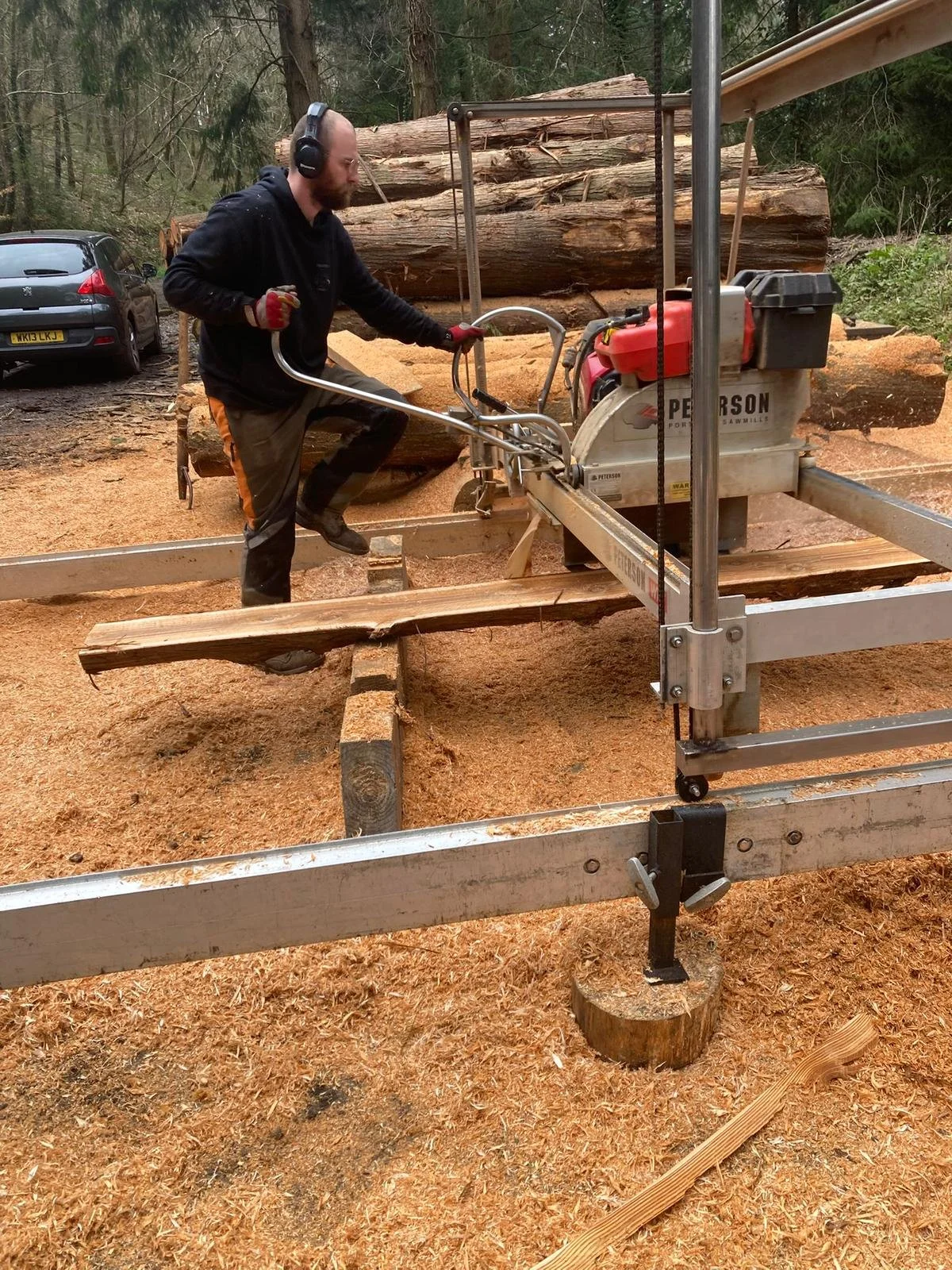
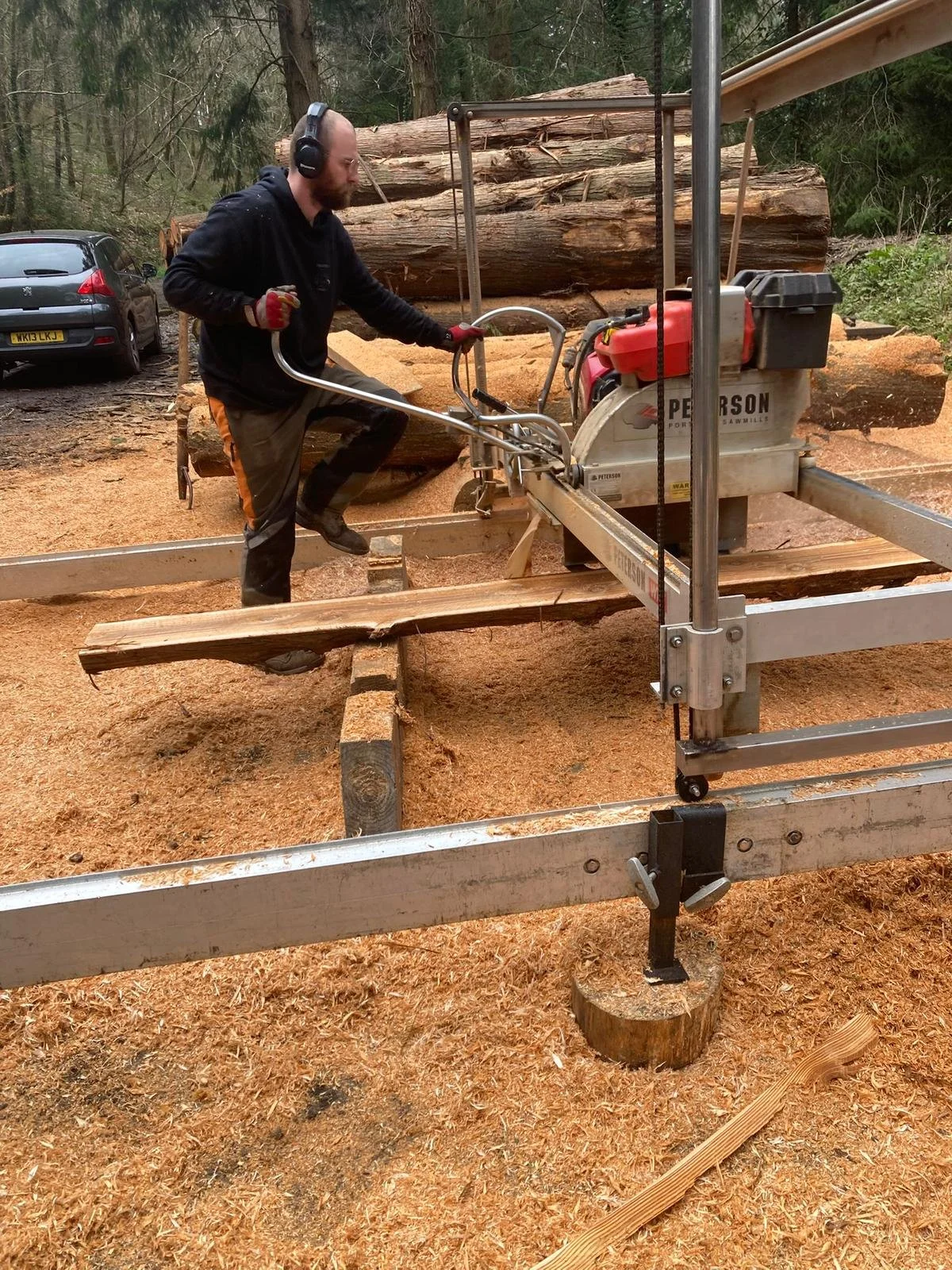
George of devontimber.co.uk using a Peterson Mobile Sawmill
PAWs for thought
We live on the east of Dartmoor, quite close to the Bovey and Teign valleys, which have lots of magnificent woodland, much in the ownership of nature conservation bodies.
Some of the woodland is Plantation on Ancient Woodland (PAWs) in the process of being restored. PAWs are sites where, in the past, normally just after the second world war, ancient native woodlands were felled and replanted with conifers.
We need all sorts of woodland and timber, including conifers, but these PAWs sites are some of the most important native woodlands in the country, containing the seedbank, mycorrhizal communities and remnant features of their ancient woodland past.
A call to the local Woodland Trust warden quickly identified some work going on one of the PAWs sites and that there was currently a stack of Western Red Cedar about to be milled by a local company, using a mobile saw mill. I was passed the number for the business and next thing had an invite to go down and see the mill in action.
It’s natural
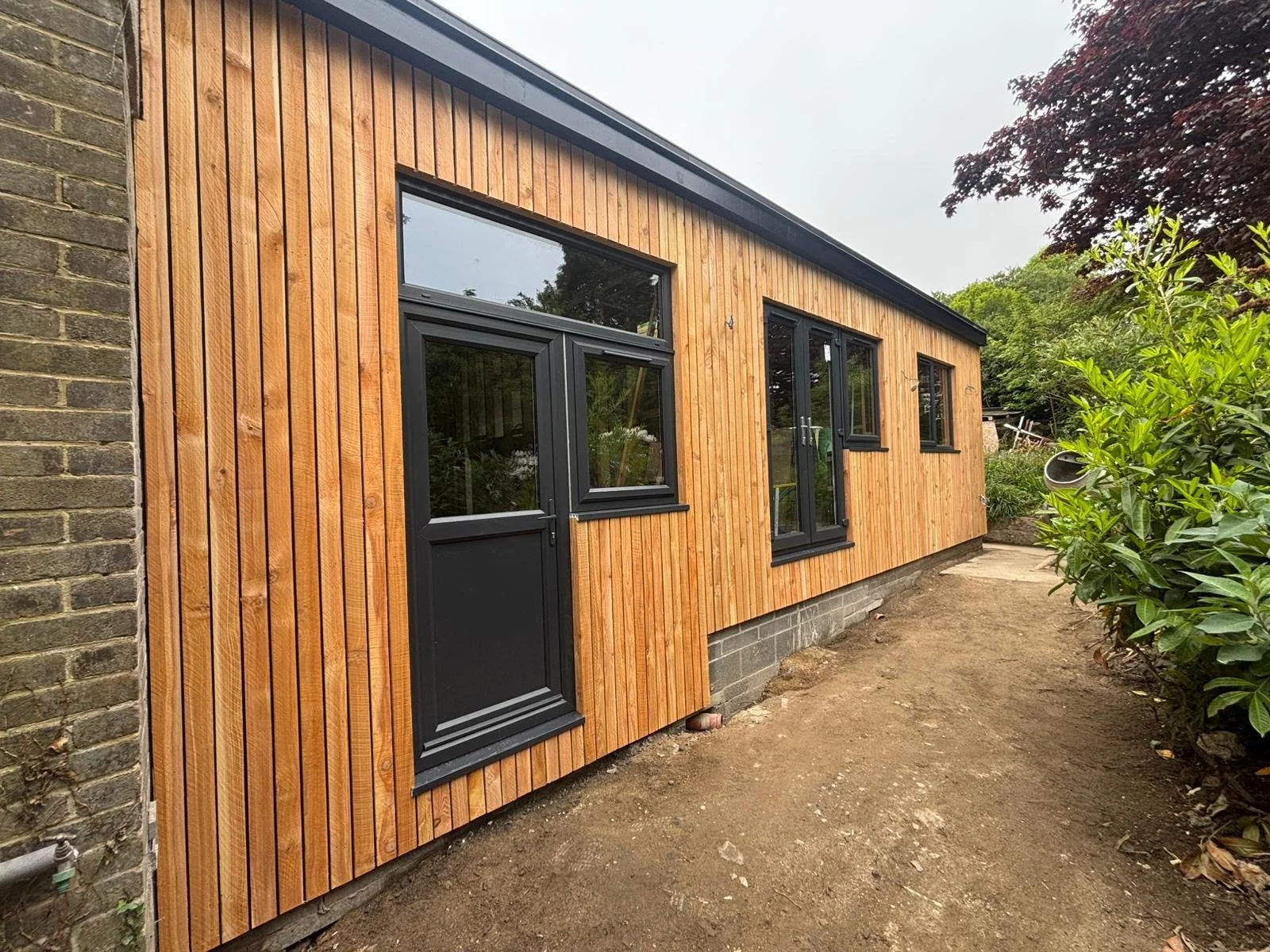
Western red cedar is one of the best woods for cladding. It contains natural oils that make it naturally resistant to decay and fungal attacks without the need for chemical treatments. It is also less likely to warp and twist than some other softwoods. It starts as a beautiful amber brown and over time should mature to a silver grey colour.
The milling was interesting. It was carried out in the woodland. I had specced 70mm by 20mm boards. They were also milling cladding for a new nature reserve building which required 100mm width boards. This allowed the mill operator to make better use of the whole trunk, but did involve a bit of maths on the fly.
The finished boards were delivered directly to the house from the wood and are now smartly fitted to the extension. Looking at the finished product, it is satisfying to know it was grown just three miles from home, harvested as part of a restoration scheme and is a genuinely sustainable solution.
Of course, there is a difficulty. The extension is on the back of the house away from the road and any callers, so no one sees it ! But …..there are a few cladding boards left over and a scrappy bit of timber over the top of the garage door which needs replacing, providing me with an interesting weekend project.
You can read more stories like this in Wood Culture: the Journal of Woodland Heritage. This 100+ page, coffee table style journal is beloved by Woodland Heritage members and is a unique benefit of membership of the charity.
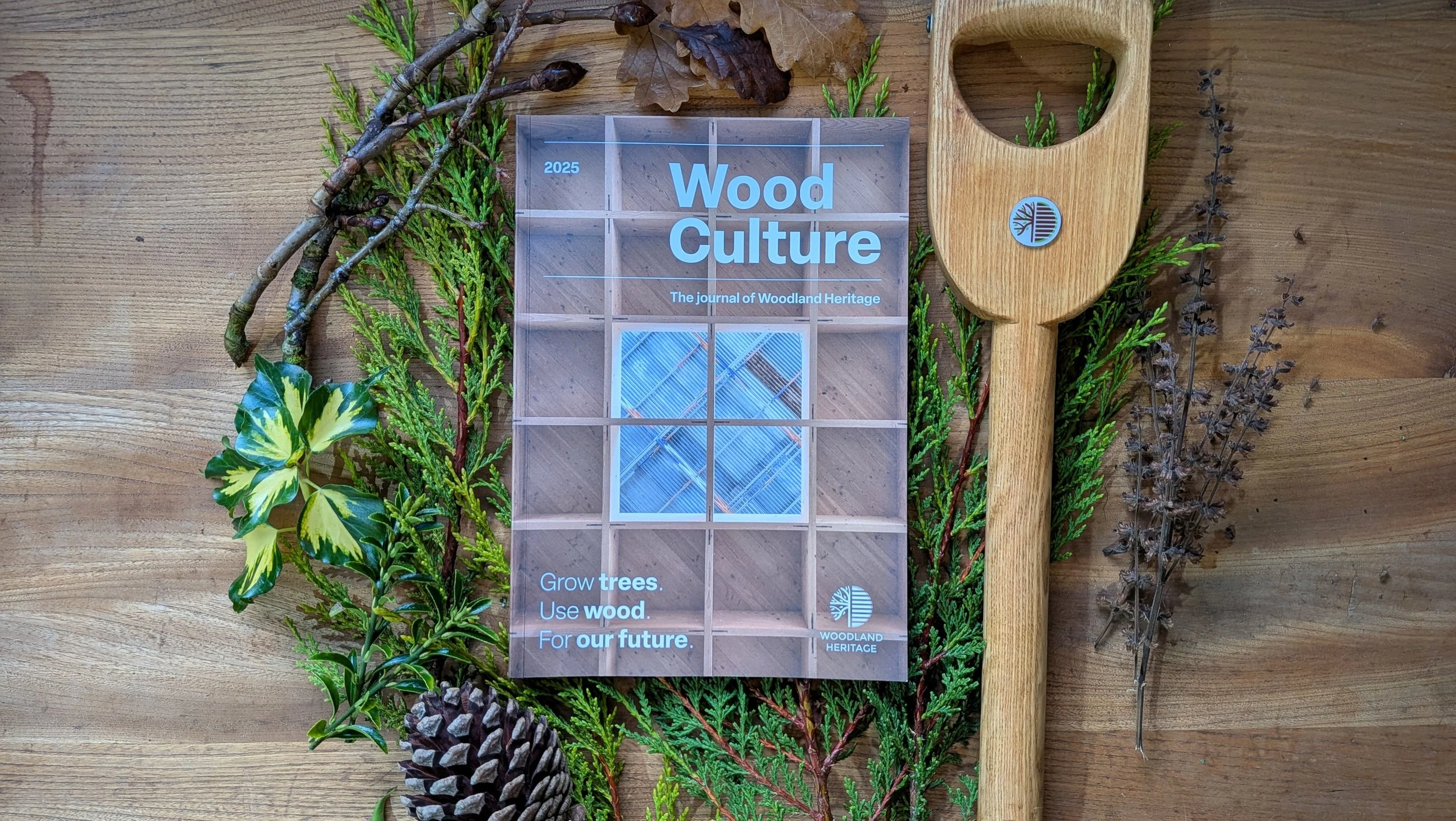
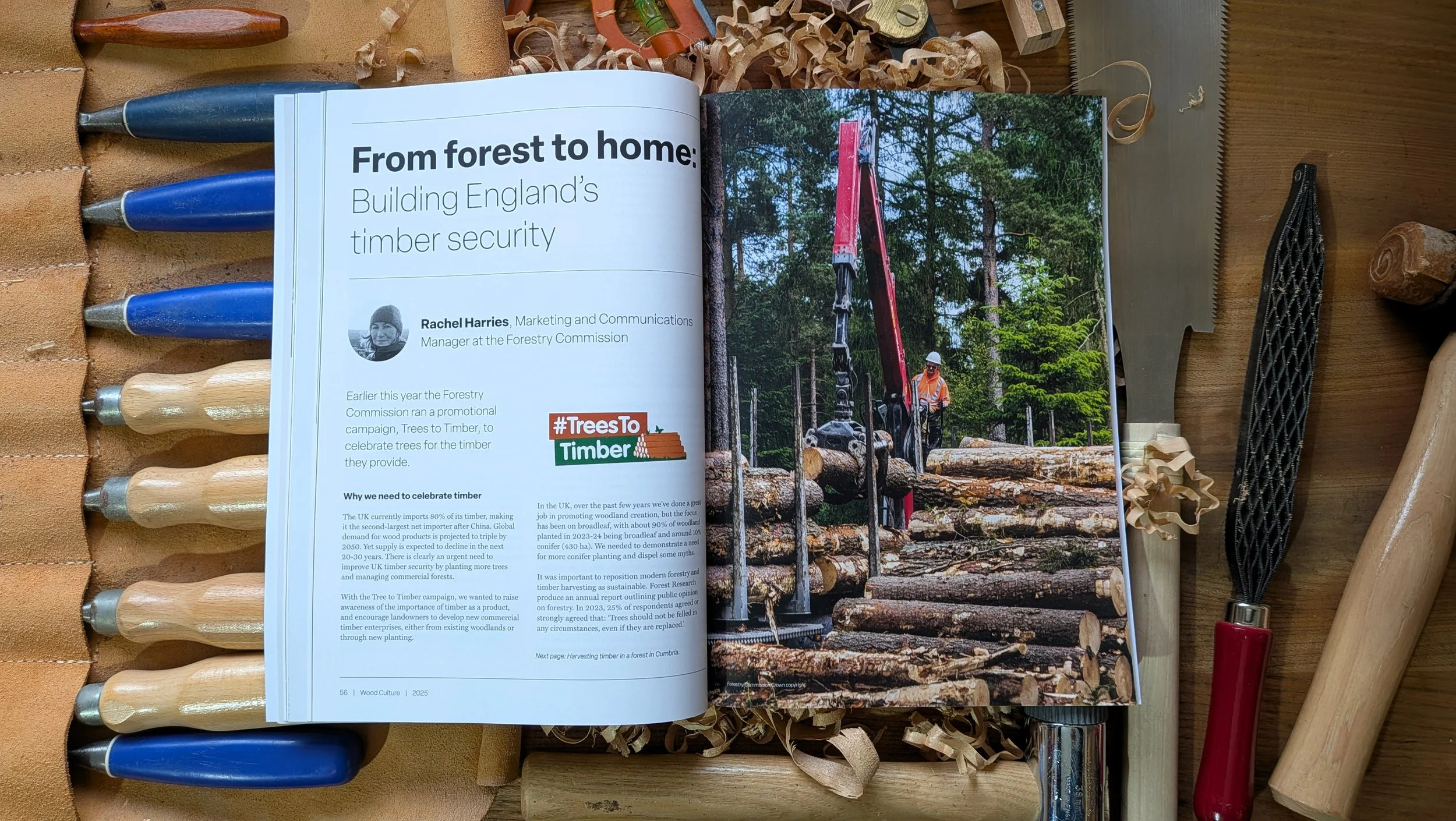
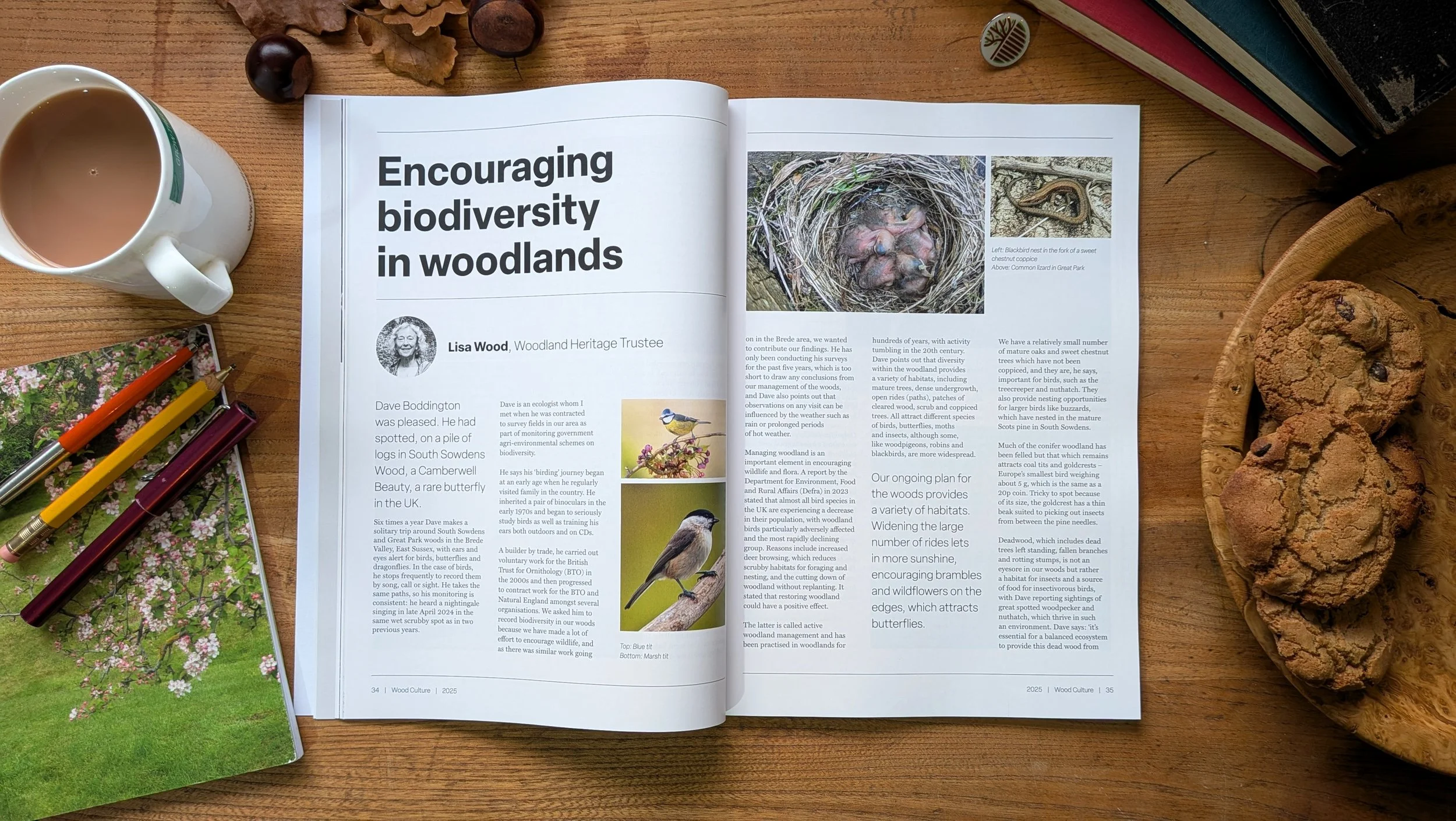
The journal is thought-provoking and inspirational, covering every part of the timber supply chain. So, if you love to read about forestry but want to know more about how timber is used, from seeds to sawdust, the Wood Culture Journal is for you