
First published in Wood Culture: The Journal of Woodland Heritage, 2024.
Wood Culture: the Journal of Woodland Heritage is published annually as a benefit of membership. You can support Woodland Heritage by becoming a member — join below.
By Tony Kirkham MBE, VMH
In April this year I was on a lecture tour in the Midwest and eastern USA at the Morton Arboretum, Chicago Botanical Garden, and the Lincoln Park Zoo in Chicago in the state of Illinois, Missouri Botanical Garden in St Louis, and Oak Spring Garden in Virginia and was so excited to meet some of the remarkable oak trees in these states.
With around 500 species of oak in the world and about 90 species in North America, I began to see the significance and importance of the native oaks in their natural landscape and how they could be used successfully in future tree planting schemes in the UK.
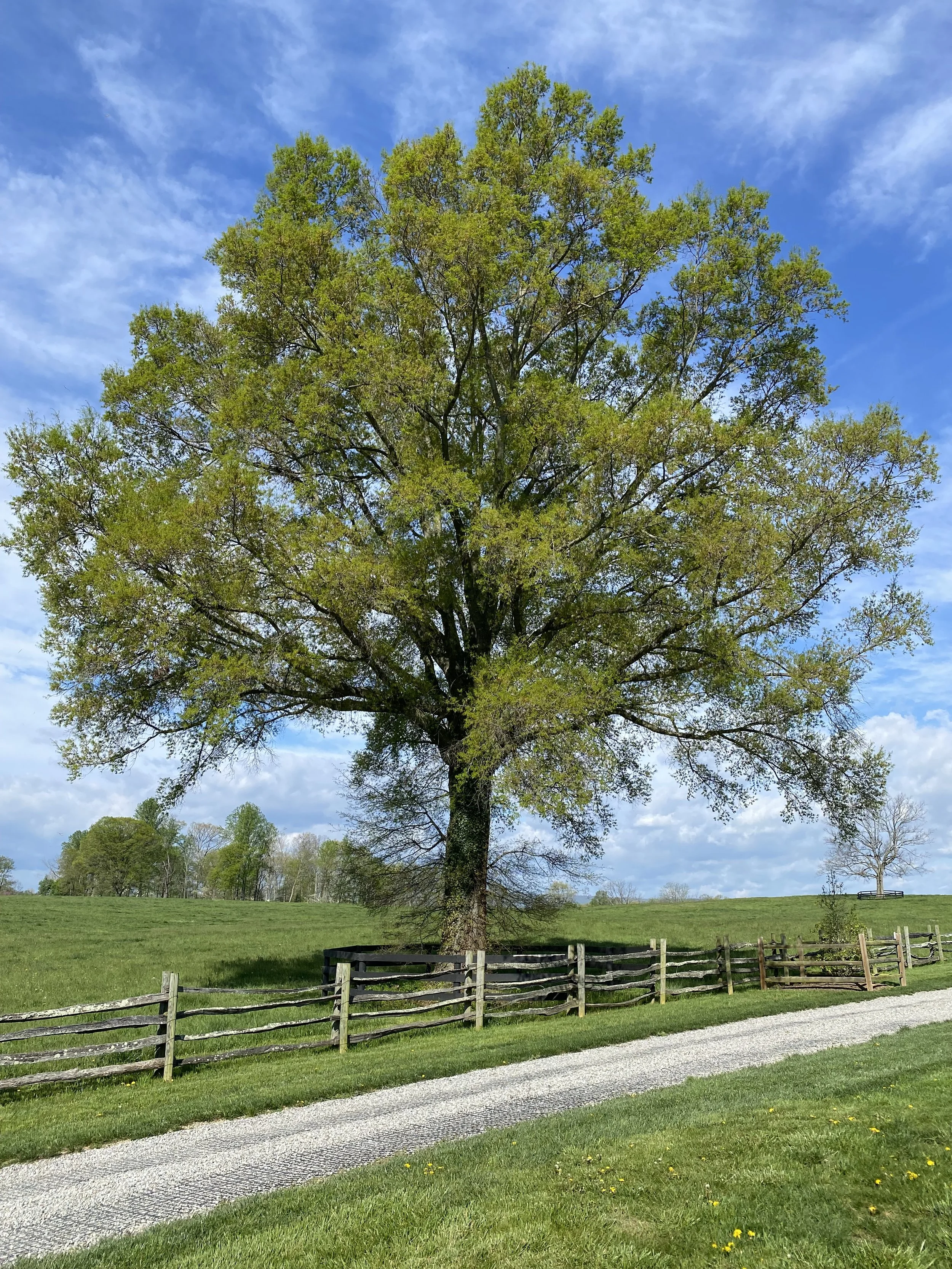
1. Chicago, Illinois - The burr or bur oak, or mossycup oak, Quercus macrocarpa
This oak is one of the most northern occurring oak species, native to eastern North America and the Midwest, where it grows in the ‘oak savanna’ habitat. It is a fast-growing, long-lived pioneer species, bordering and invading prairie grassland where it makes a large deciduous tree: up to 30 m, with a round canopy, variable lobed leaves, and living up to 400 years. The thick, grey bark is fire-resistant, which helps it to outgrow the more shade tolerant competitive tree species that are managed by spring and autumn fires. It is drought resistant, more tolerant of alkaline soils than most oaks and is resistant to oak wilt (Ceratocystis fagacearum).
The common name ‘Burr’ describes the cupule of the acorn, which looks like the spiny shell of a chestnut. The specific epithet ‘macrocarpa’ derives from the large acorns, which can grow to the size of a golf ball, and are the largest of any of the native North American oak species. The valuable wood is used commercially for flooring, fencing, cabinets and barrels.
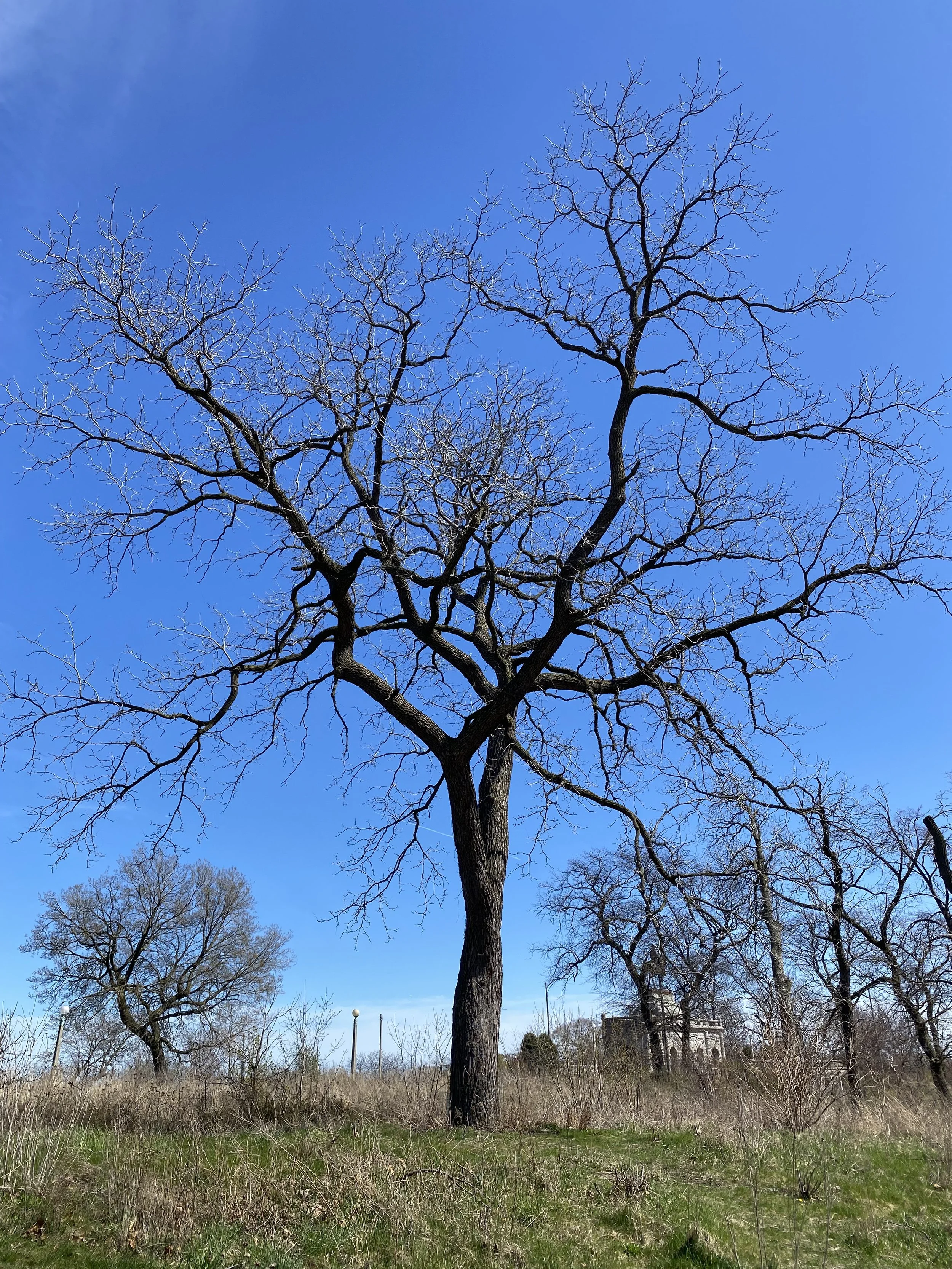
2. St Louis, Missouri - The pin oak, Quercus palustris
This oak is a popular tree in our British nurseries and comes in a wide variety of nursery stock sizes and forms due to its love of transplanting and tolerance of pollution, but to see exceptionally large mature specimens growing in gardens makes you want to plant more. A young tree has a straight trunk with smooth bark and a pyramidal crown, maturing into a large tree to 35 m with rough bark and a looser, spreading crown. It is a member of the red oak section of the genus Quercus, with deeply-cut, pointed-lobed leaves that turn bronze in autumn. It is a fast-growing, short-lived pioneer species in its natural habitat, which is acid marshland or swamps (with the Latin specific epithet ‘palustris’ referring to this), and it will not tolerate alkaline soils. The common name ‘pin oak’ is possibly derived from the small thin twiggy nature of the branches, or that the hard timber was used for making pins in joinery. The timber. which is marketed as red oak, is of much inferior quality with many small knots from the twiggy nature of the tree but is hard and heavy and used for general construction or firewood.
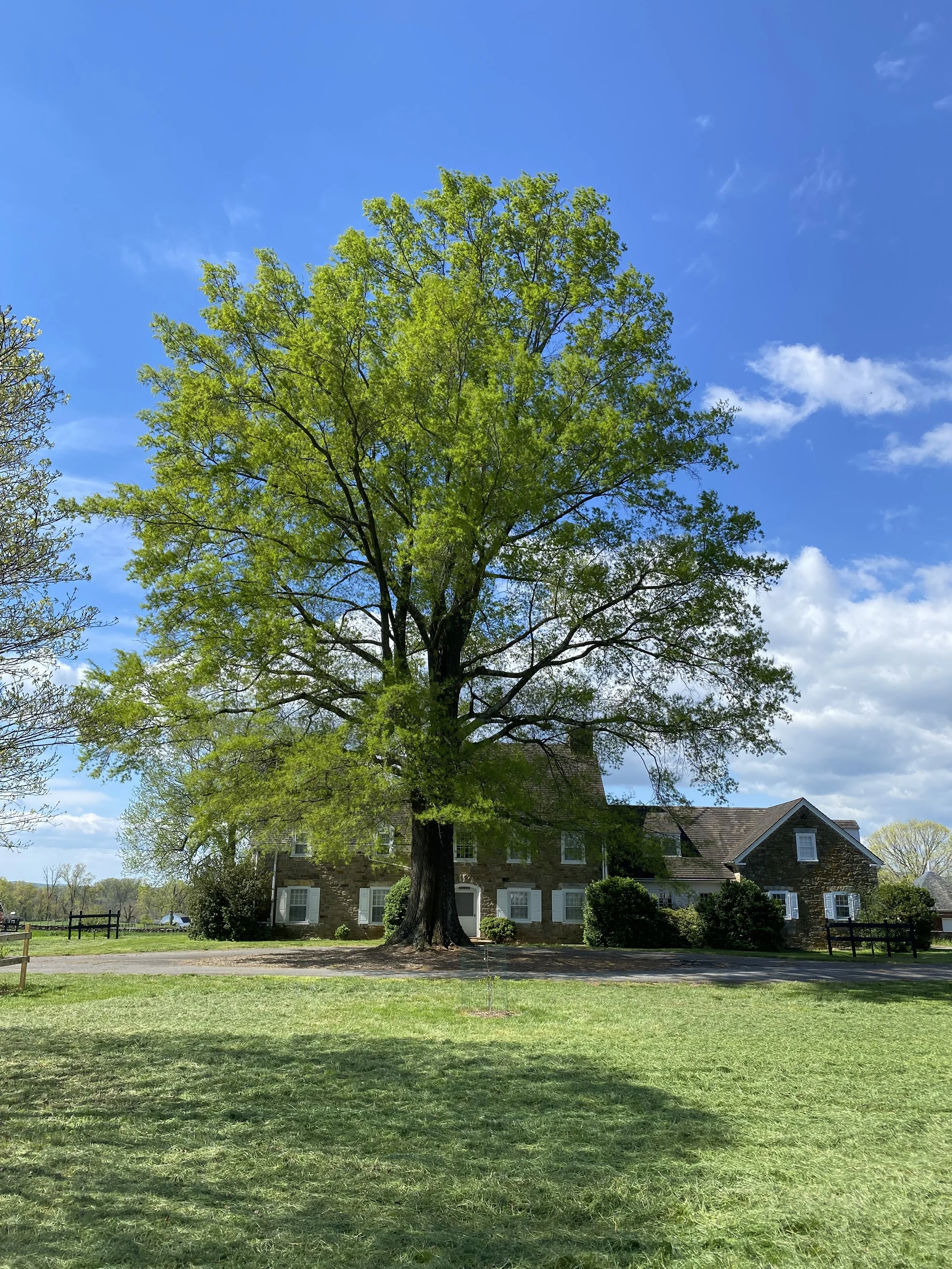
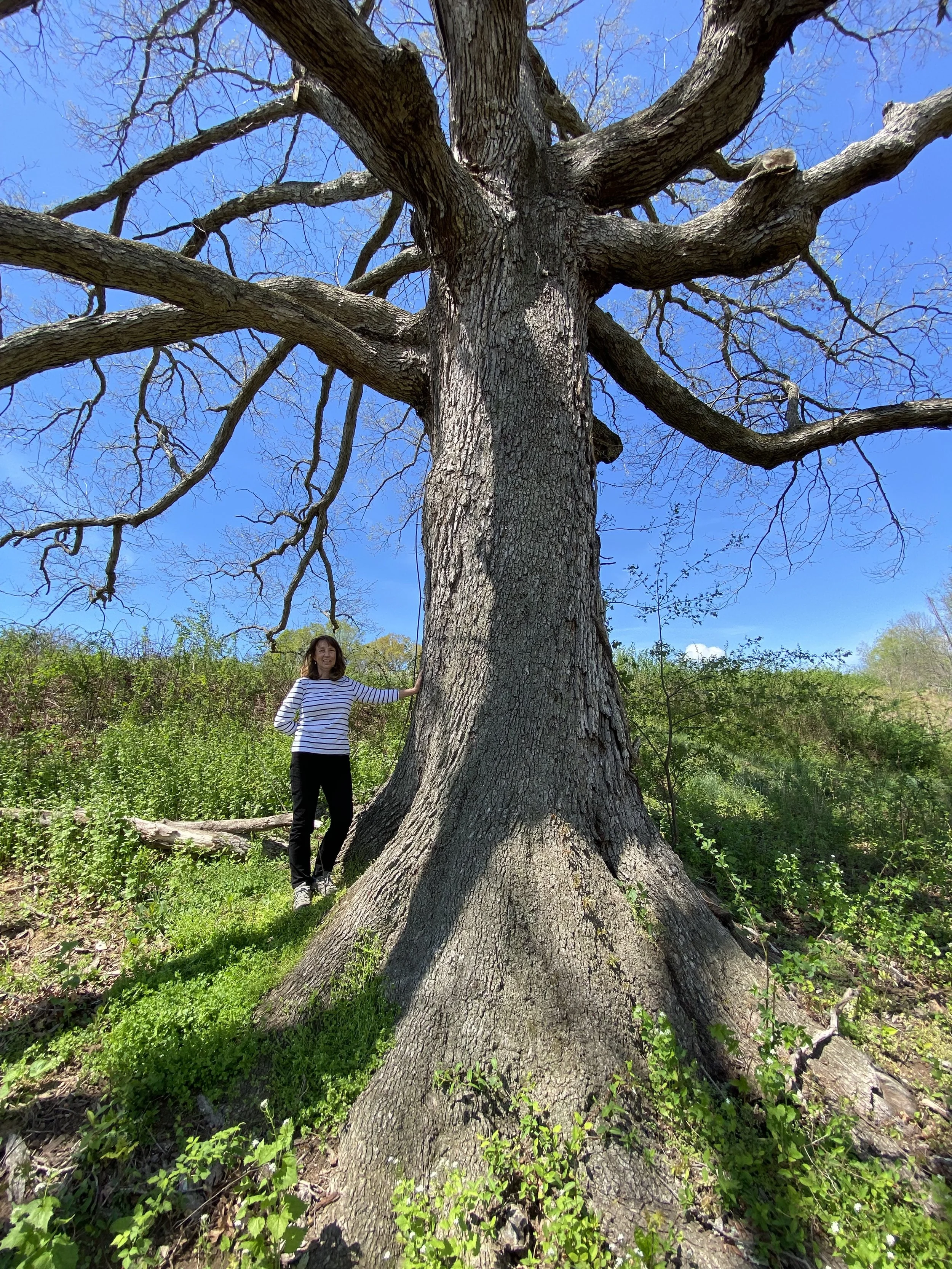
3. Oak Spring Garden, Virginia - The white oak, Quercus alba
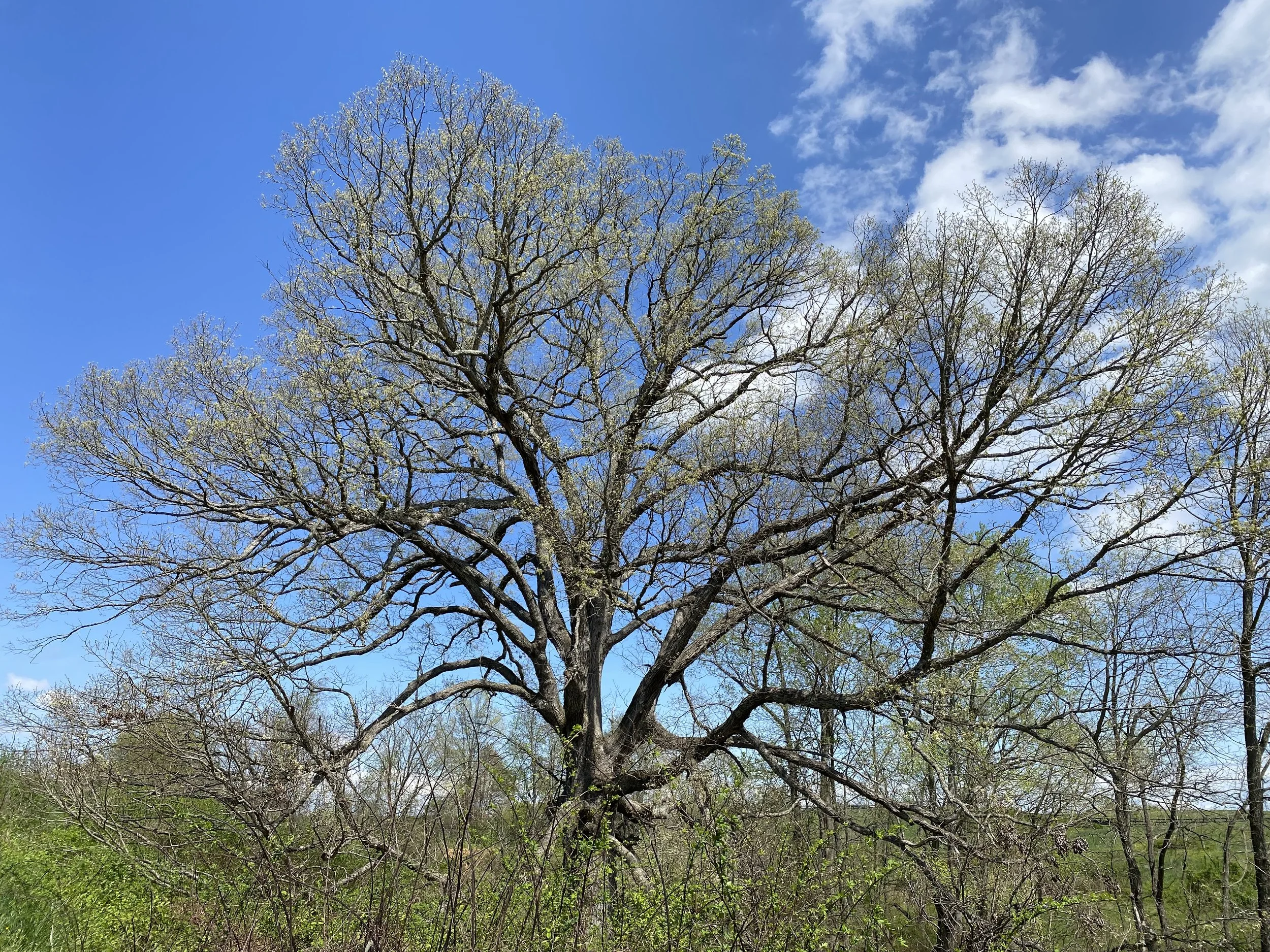
As the pedunculate and sessile oaks are the eminent trees of the British Isles, the white oak is the eminent long-lived hardwood native tree of eastern and central North America, with veteran specimen trees reaching over 450 years old. With a stature and habit closely resembling our native oaks, in the forest it can reach a height of 25 to 30 m and in the open specimens develop low horizontal spreading scaffolds creating magnificent broad crowns, often spread far wider than the overall height. The deeply fissured bark is a pale grey and this is where ‘alba’ the specific epithet originates from. The colour of the finished timber is almost white and where the common name ‘white oak’ derives. It is a lowland species found growing in full sun to partial shade in deep well-drained acid to neutral soils, disliking wet soils and showing some tolerance of drought once established. It can be difficult to transplant in gardens and the wider landscape due to the deep taproot that it produces, which is most probably why it isn’t grown to any extent in the UK. The large round-lobed leaves, can be up to 20 cm long and are very similar to those of our two native oaks. They emerge in spring tomentose, beautifully covered in white woolly hairs, making it an easy oak to identify in the field, turning deep red in autumn, remaining on young trees through the winter. The wood of this oak has a closed cellular structure, which is water and rot resistant, so favoured by coopers to produce wine and bourbon barrels as it doesn’t leak and imparts strong flavours to the wine and whisky.
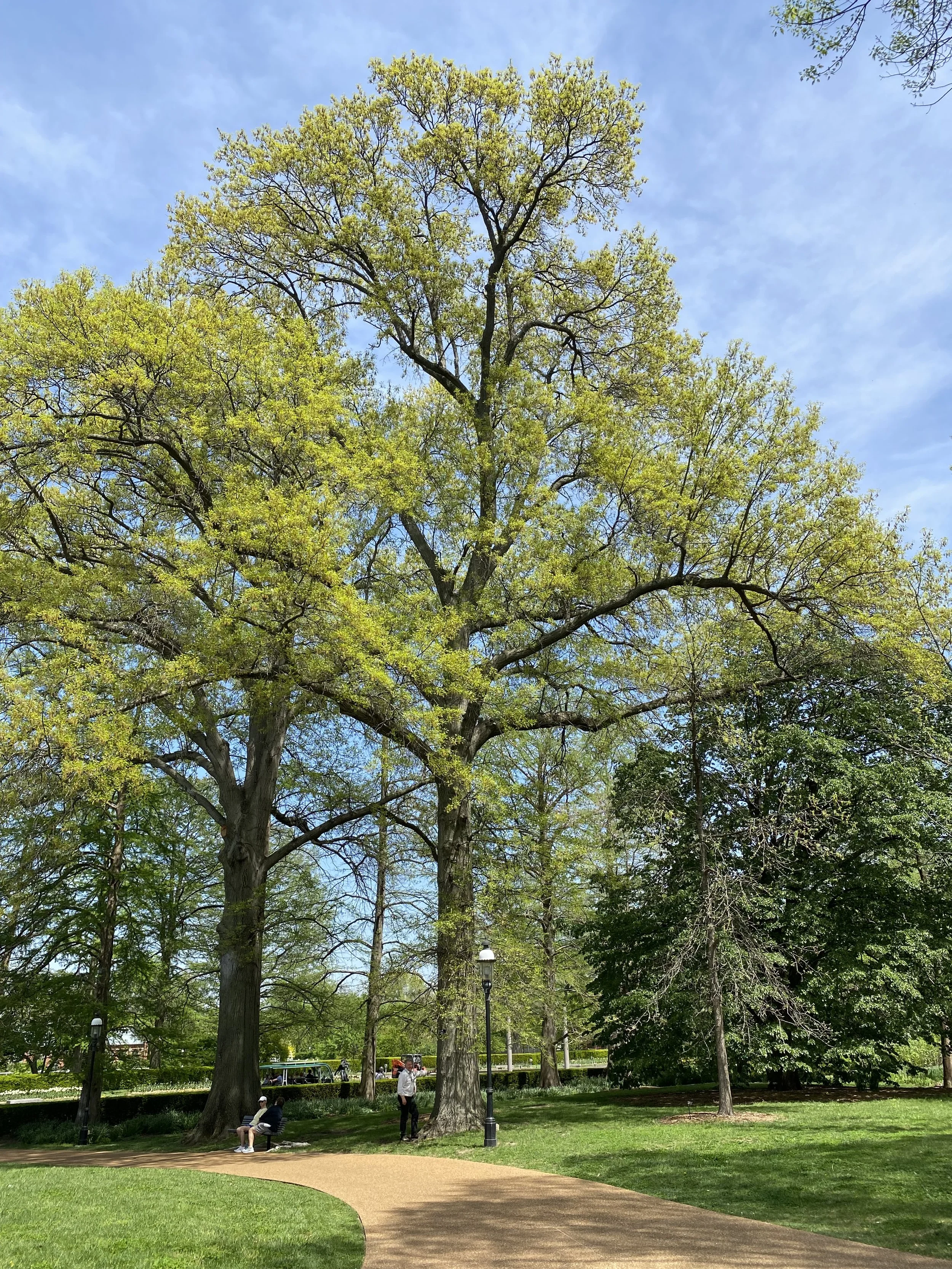
4. Oak Spring Garden, Virginia - The Willow oak, Quercus phellos
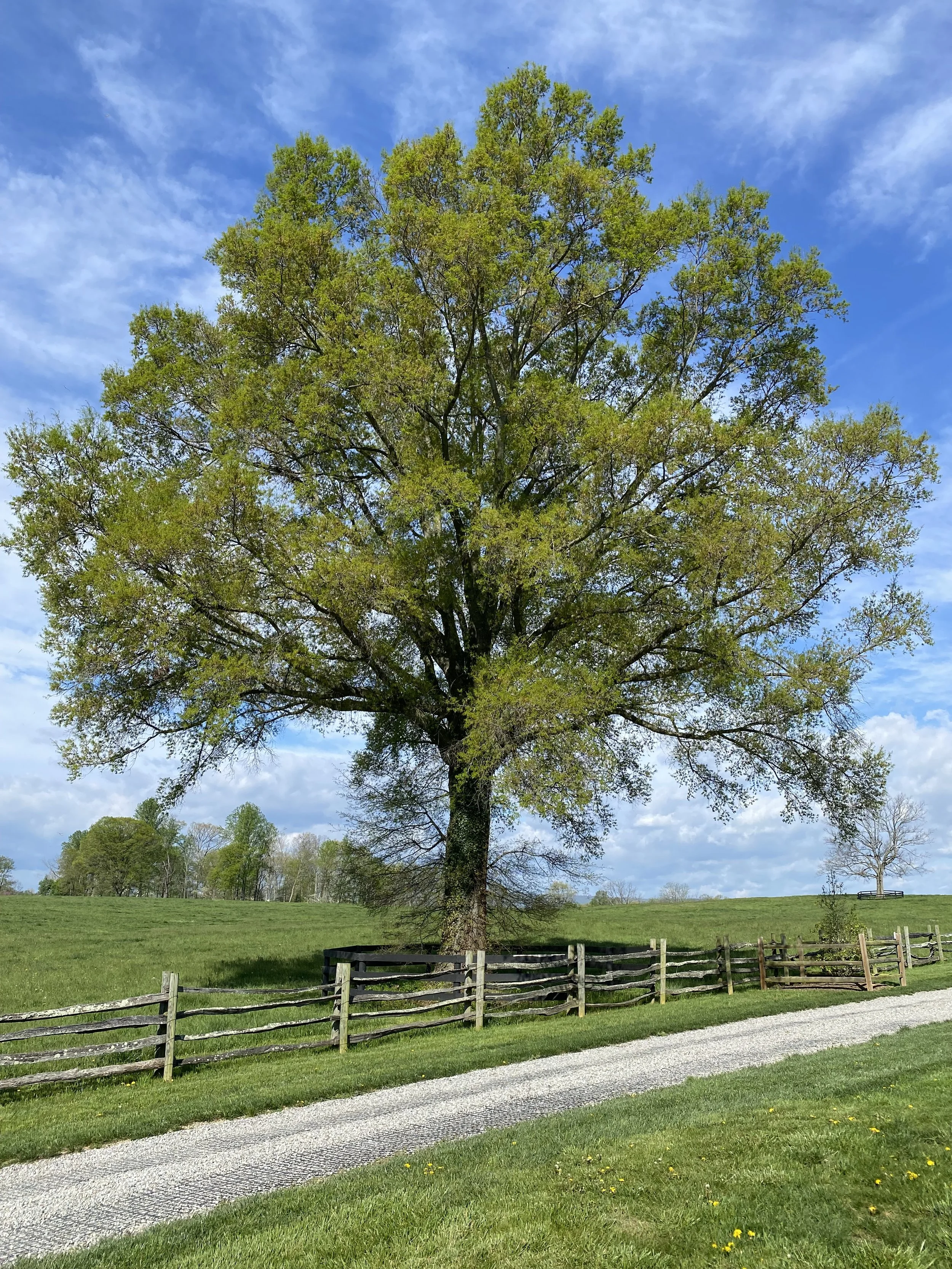
I was blown away by this species when I met it at Oak Spring Garden, mainly by its rate of growth as it reaches maturity at 30 to 35 m tall, but also its almost perfect round canopy when open grown. Native to the south central and eastern United States its native habitat is the bottomlands in deep fertile, acid soil, in full sun to light shade. Despite being in the red oak section of Quercus, it has unlobed, lanceolate, willow-like leaves which are adequately described from the common name. The specific epithet ‘phellos’ is the Greek name for cork and must not be confused with the European cork oak, Q. suber. The bark of an old mature tree can be corky. The root system is fibrous making it easy to transplant and, once established, it tolerates soil compaction, drought and air pollution very well making it the perfect shade tree for planting in the urban environment. The durability of the timber is minimal as it does not have the level of decay and rot resistance that the white oak has, but it takes stain and finishes very well, so can be considered for internal carpentry and flooring. It is an important ecological tree for wildlife with a regular prolific crop of acorns, producing the smallest acorn of the oaks from an early age.
Wood Culture: the Journal of Woodland Heritage is published annually as a benefit of membership. You can support Woodland Heritage by becoming a member - join below.