“I have gained invaluable knowledge and perspective by attending this course and I know it will shape my future actions in a positive way.” - Jessie
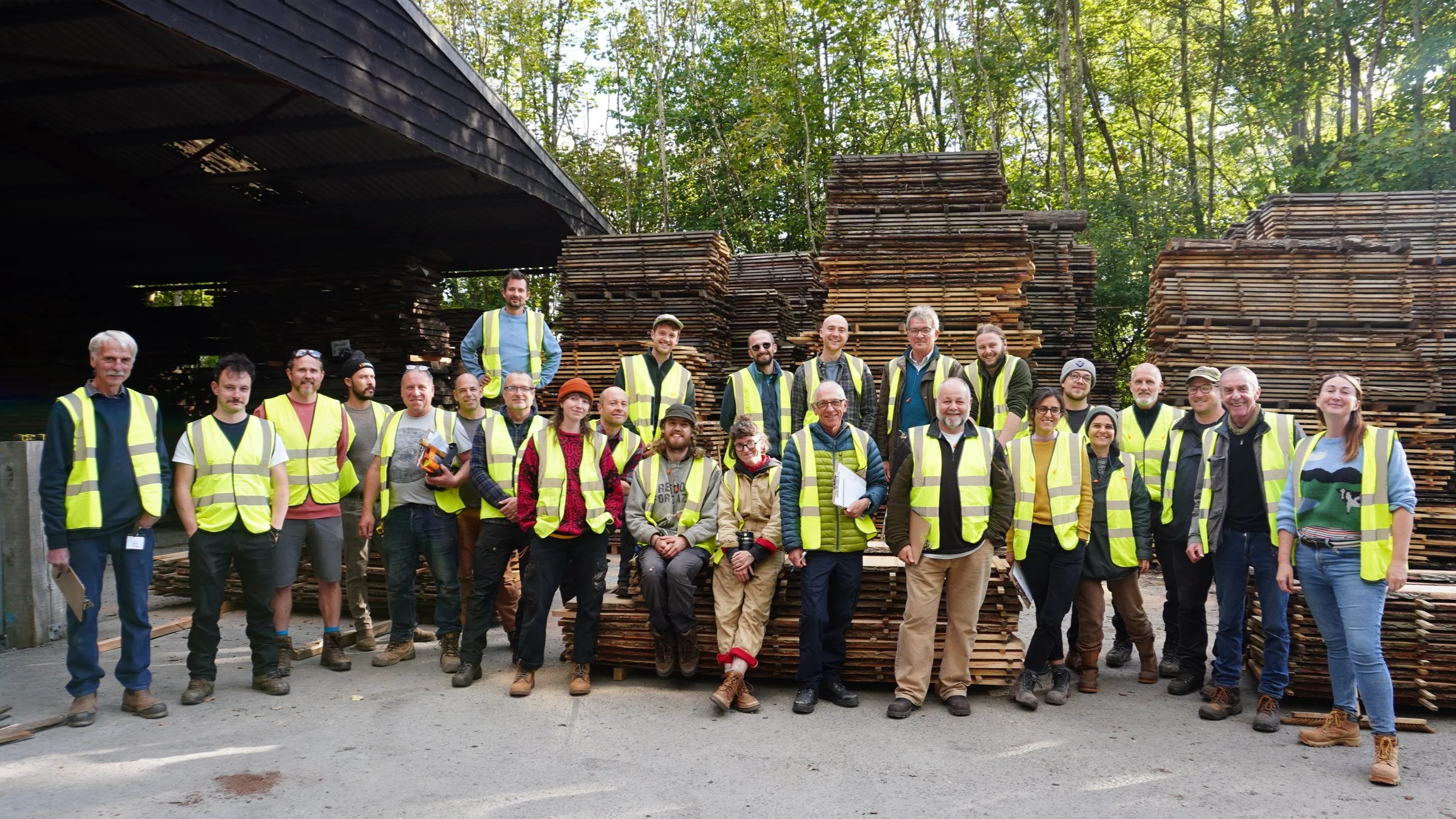
Woodland Heritage’s Woodland To Workshops course provides attendees with an overview of our wood culture: from the woodland to the workshop. Three days: one in the woodland, one in the workshop, one at the sawmill.
The 2025 course was the the 30th Woodland to Workshop course run by Woodland Heritage. Attendance has increased to 24, allowing us to share knowledge with a wide group of students.
Thanks to our generous donors, Woodland Heritage provides bursaries each year to help people to attend the course. Below you’ll find reports from grant recipients in 2025. It’s always great to hear feedback on the course, helping us to grow and improve each year.
The 2026 course is now sold out but you can register your interest and learn more about the course on our website:
Jessie Atkinson
“The woodland to workshop course is three intense days of varied lectures, site visits and interactive tasks, spanning the length of the forestry industry. Coming from a forestry management background I found myself out of my usual depth and surrounded by a wealth of knowledge on the days spent in the university NMITE building and sawmill, but in the forests I found myself able to step on the other side of the scale, knowing more than my woodworking counterparts. This unique combination of foresters and makers attending the course allowed for the marrying of these industries, where there is usually a disconnect. I found the course material and discussions surrounding the day and evening events were inspiring to a lot, and could feel this driving the group forward into their personal lives.
I particularly found the visit to Whitney sawmill interesting, and added a new perspective to managing a woodland for long term goals. Being walked through the process of buying timber and selling timber, milling it into product, selling the product, and calculating profit from start to finish, allowed us to conceptualise the value in timber and maintaining good management of a woodland. The evening events of the course inspired healthy debate and networking between attendees. This is an invaluable addition to the course alongside the information packed day events. Overall I think the course is well worth taking part in and know it will guide me on my path forward in forestry.
Having grant funding for this course has allowed me the opportunity to tap into the wider sphere of the industry, something that often feel inaccessible for a rural low income landworker. I have gained invaluable knowledge and perspective by attending this course and I know it will shape my future actions in a positive way. I have already felt the impact of this course, the information, and the connections, as I take my next steps in the forestry world.”
Rae Woods
“I was lucky to receive a grant to attend the Woodland to Workshop course this September. I am a woodworker based in Abergavenny, and my practice focuses on homegrown timber, so applying was a no brainer.
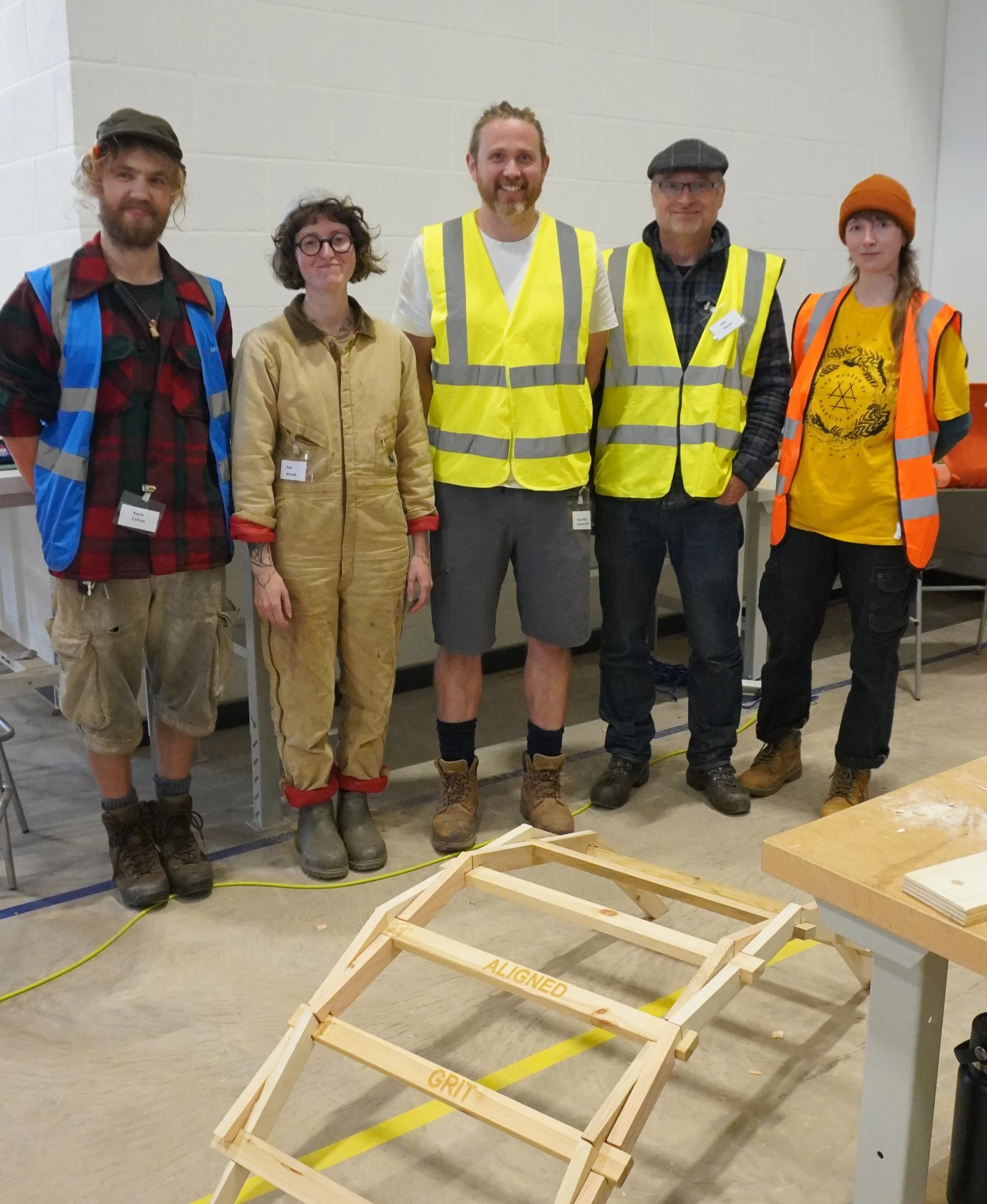
Over three days we discussed management plans, grading, disease, pests, and UK timber species. We built reciprocal bridges, calculated the volume and price of a log, and spent the evenings discussing our learnings over drinks. Like most good courses it was made all the better by my coursemates. W2W generally attracts a wide range of people, and with almost 20 of us this variety enables a huge amount of peer to peer learning.
As woodworkers we are typically disconnected from where the timber comes from, but having studied at The Sylva Wood School and lived in continuous cover crop woodlands, this was a welcome albeit troubling re-acquaintance for me. One of the biggest take-homes from the course was how much our changing climate has affected our woodlands. Trying to do right by the environment whilst also running a thriving business is a challenge for many of us, especially as how we do so will change in ways we can't predict in the coming years.
This may feel overwhelming, but like many of the challenges we are facing today, I believe action is the only solution to hopelessness.
For we all know, the best time to plant a tree was 20 years ago, the second best time is today.”
Flynn Scott
“This September I received a grant to attend the prestigious Woodland to Workshop course from Woodland Heritage. On day one we convened at the impressive NMITE campus in Hereford, to meet all the other participants and the tutors. Jez Ralph of Evolving Forests gave a fascinating insight to the sociocultural history of forestry in the UK, and the dilemmas and opportunities that we face as land managers and makers today. Dermot Doyne of Whitney Sawmills then presented us with a selection of oak stems in the workshop, to demonstrate how to spot features like ring shake and spiral grain, and how these can affect the value of timber. We learnt how to calculate the value of a sawlog both in the metric, and the old school ‘Hoppus foot’, and discussed how the introduction of 3D scanning could change the dynamics of timber sales. The evening session was delivered by Elly Deacon Smith, founder of Arbor Architects, who shared experience of specifying timber in low-impact construction, followed by a Q&A.
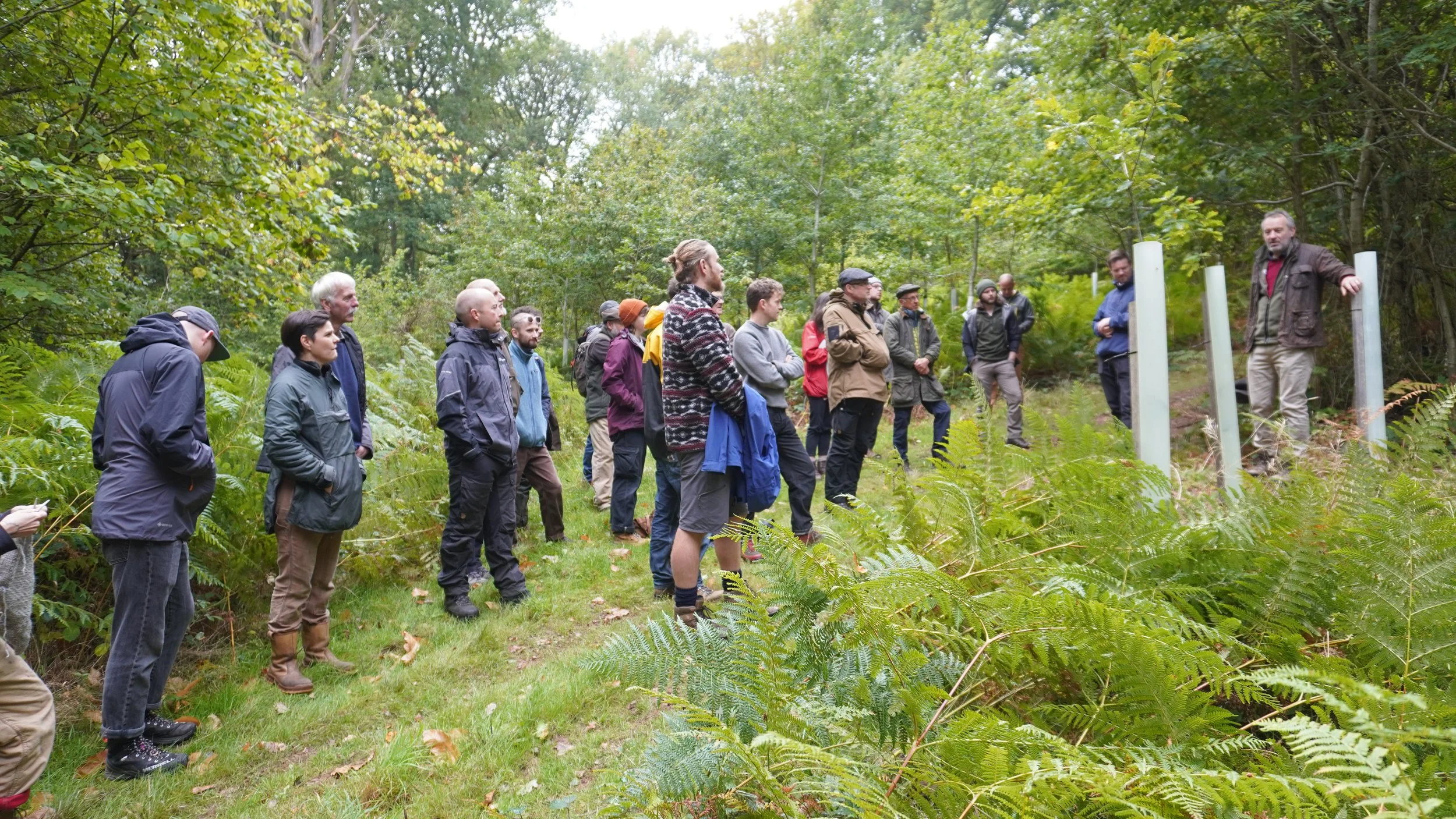
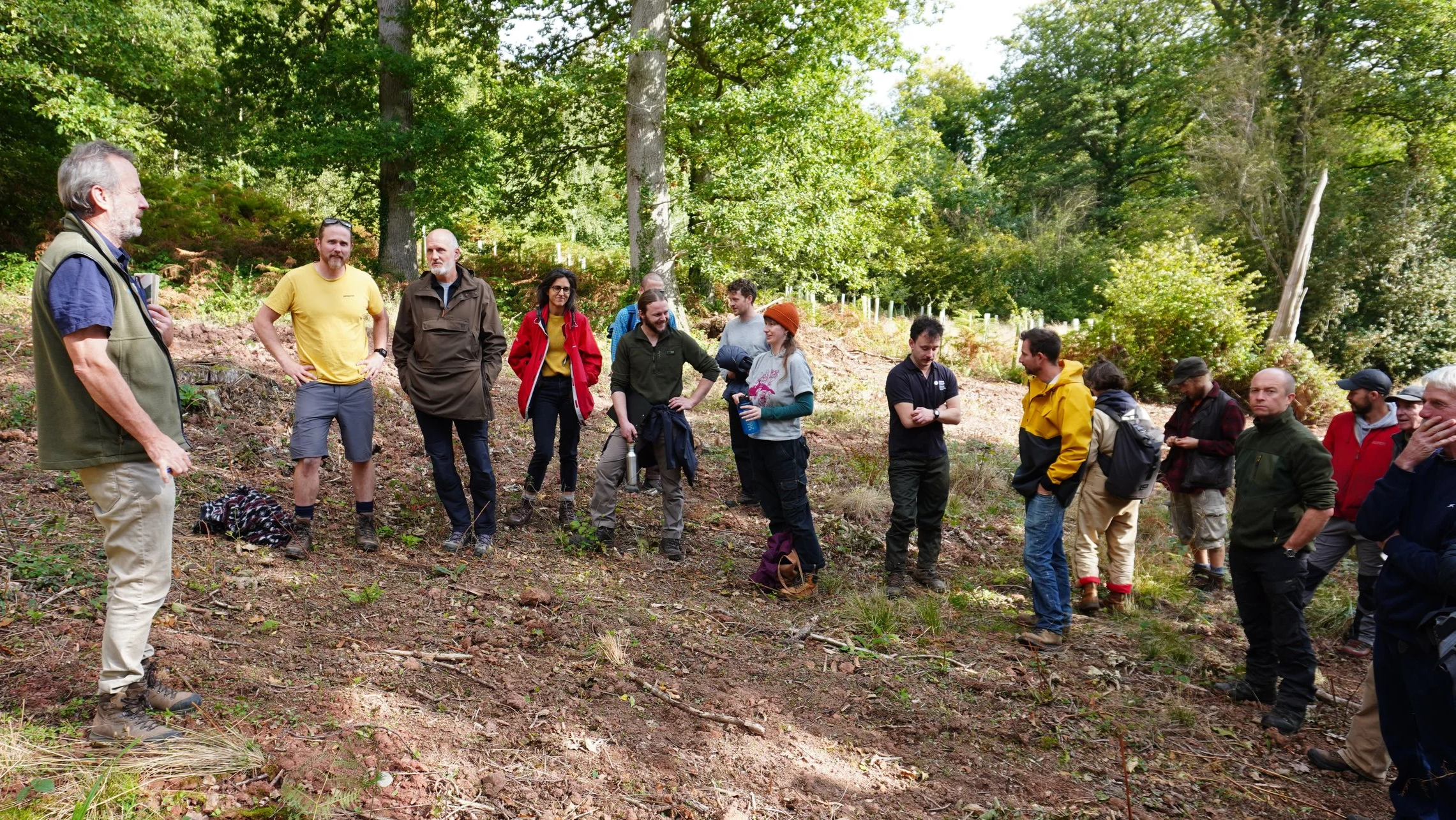
Day two was a tour around the stunning Duchy of Cornwall Estate by Graham Taylor and Ben Anderson, who guided us through silvicultural systems. We learnt about species choices, ground prep and establishment, thinning regimes and close-to-nature harvesting systems, and the pressing challenge of squirrel control was discussed in depth.
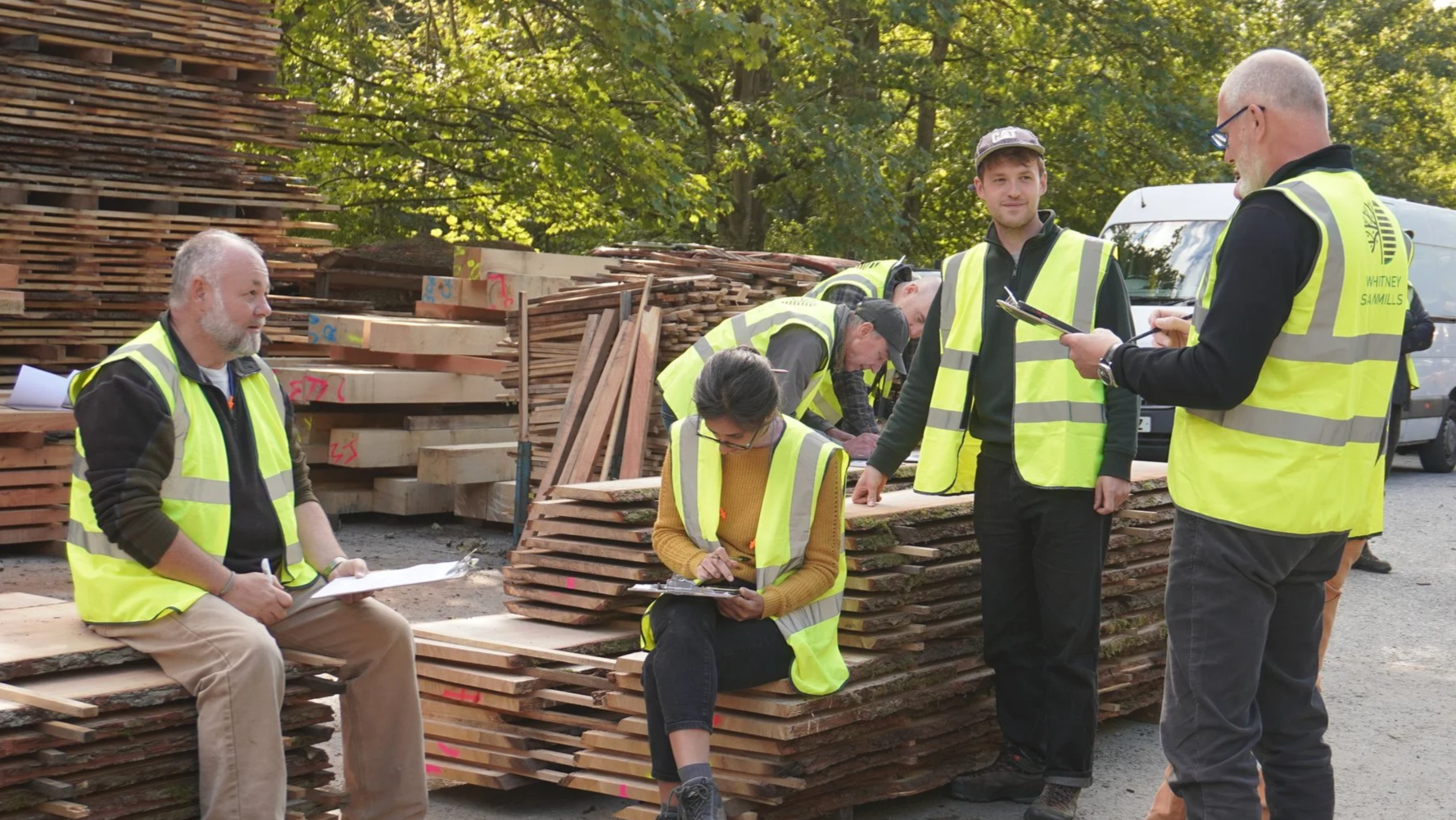
Whitney Sawmills hosted us on the final day, where were put into the shoes of the sawmiller and split up into teams to price up and calculate the volumes of several sawlogs, verifying our estimations after we’d watched the milling process. Woodland to Workshop 2025 was a fascinating immersion into the wood culture of the UK, with amazing insights not only from the tutors, but from all the other participants.
Grant Funding
Thank you for the opportunity to attend Woodland to Workshop 2025. Having just finished my MSc in Environmental Forestry, the course provided me with crucial insights into the whole timber supply chain and was a great opportunity to network with makers, land managers, and innovators who all share the same goal of improving the culture of wood in the UK. I am now working for Forest Research on a project developing non destructive testing methodologies for oak shake, understanding the environmental causes of shake, connecting with sawmillers to understand the economic implications that shake can have. The W2W course has enabled me to understand the dynamics of these issues and how they fit into the bigger picture of the UK timber markets, which has been hugely valuable for my career development in forestry. Thank you.”