
A version of this article was first published in Wood Culture: The Journal of Woodland Heritage, 2024.
Wood Culture: the Journal of Woodland Heritage is published annually as a benefit of membership. You can support Woodland Heritage by becoming a member — join below.
Nick Wright describes his work at the Snowdon School of Furniture.
The Snowdon School of Furniture started as a one-week summer school, the brainchild of David Snowdon and Carmel Allen, Linley’s then creative director, to celebrate 30 years of Linley Furniture and give something back to support student makers.
David Snowdon, who is vice-president of The King’s Foundation, saw that there was a shortage of skilled makers coming into the industry. So along with designer and educator William Warren, and Jonathan Rose, one of Linley’s lead makers, they devised a short course that would equip these aspiring makers with additional, more specific skills to build on what they had already learnt at college.
Originally run from Museums Wiltshire, a recently restored Tythe Barn in Tisbury, Wiltshire in August 2016, it moved to The King’s Foundation’s Dumfries House headquarters in Scotland in 2019, where I myself was fortunate to be a student.
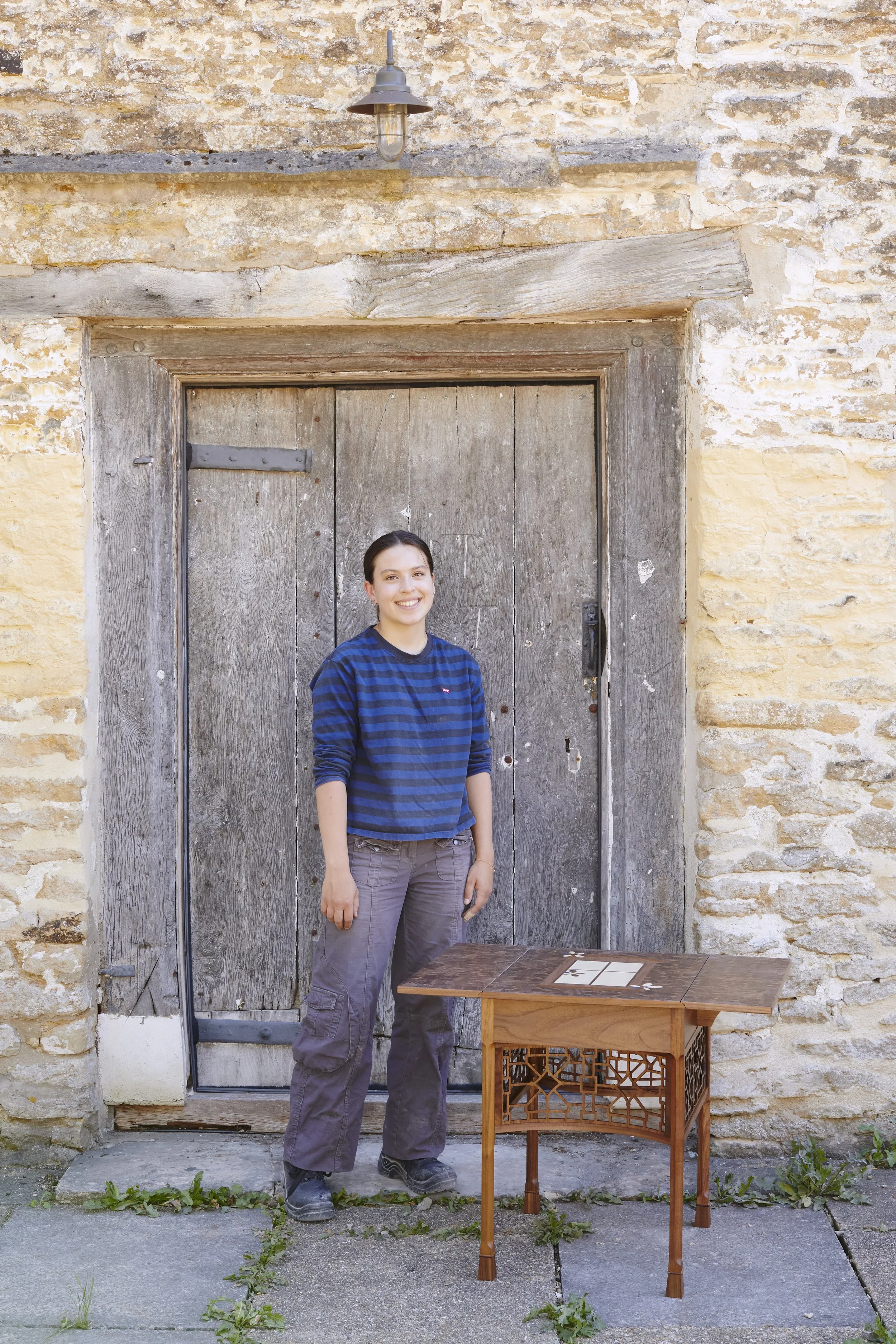
A student with table inspired by a piece from the Chippendale collection at Dumfries House
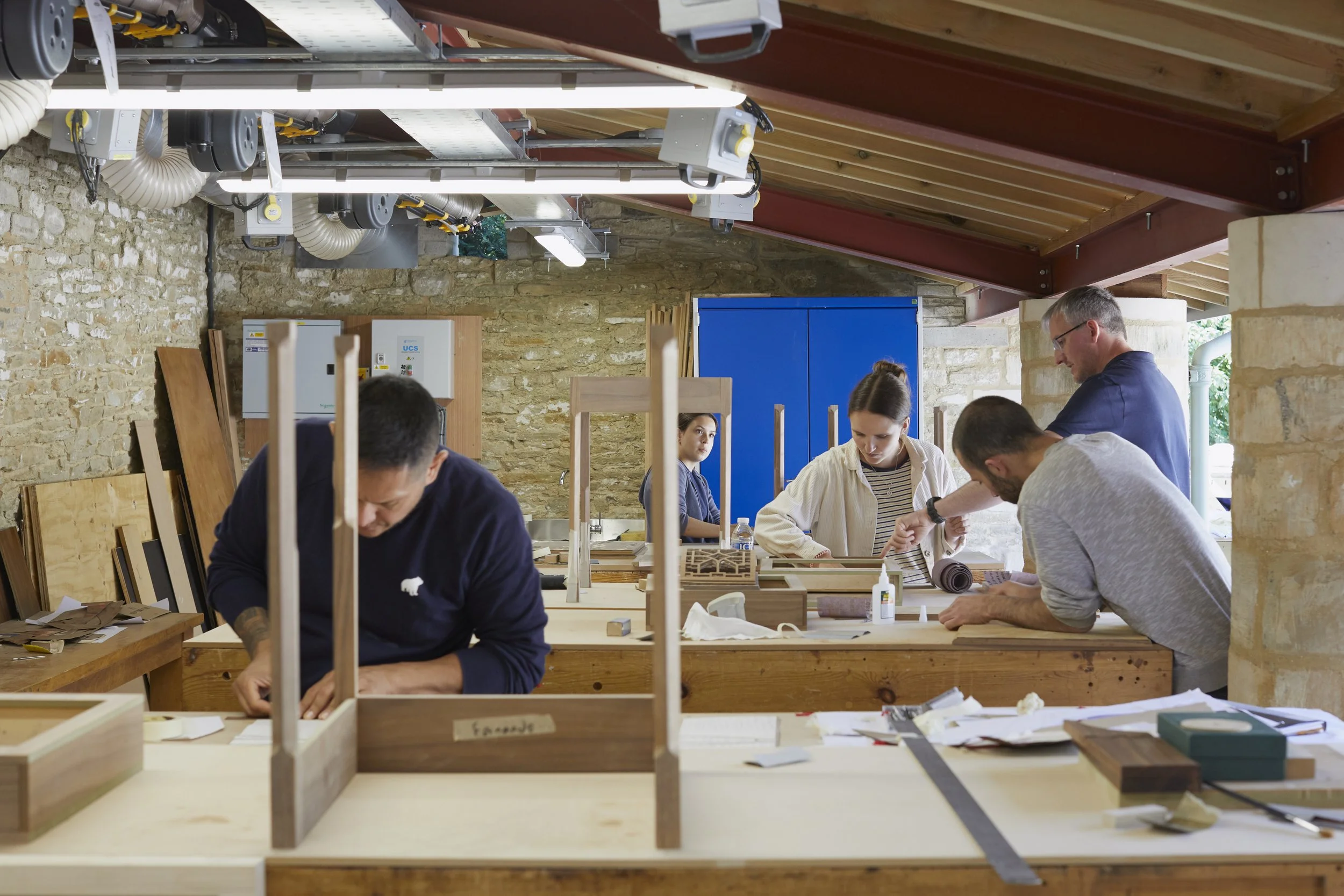
During the course, I and my fellow students completed a small side table with a dovetail drawer and hand cut marquetry top. For the past two years, students have completed a small table inspired by a piece from Dumfries House’s famed Chippendale collection. While the components for the table are provided for them, they must assemble them and prepare them for finishing before applying an oil finish. All the time striving for the levels of excellence demanded by customers.
Along with practical skills students learn about design, pricing and selling work and professional practice. Past summer schools have included sessions taught by specialist guest tutors on leather work, high gloss polishing and French polishing. In addition, students have had tours of Dumfries House, Highgrove Gardens and local landmarks to view craft work and inspire marquetry design. The Summer School took a break during the pandemic and was run again in July 2022 in its new home at Highgrove Gardens.
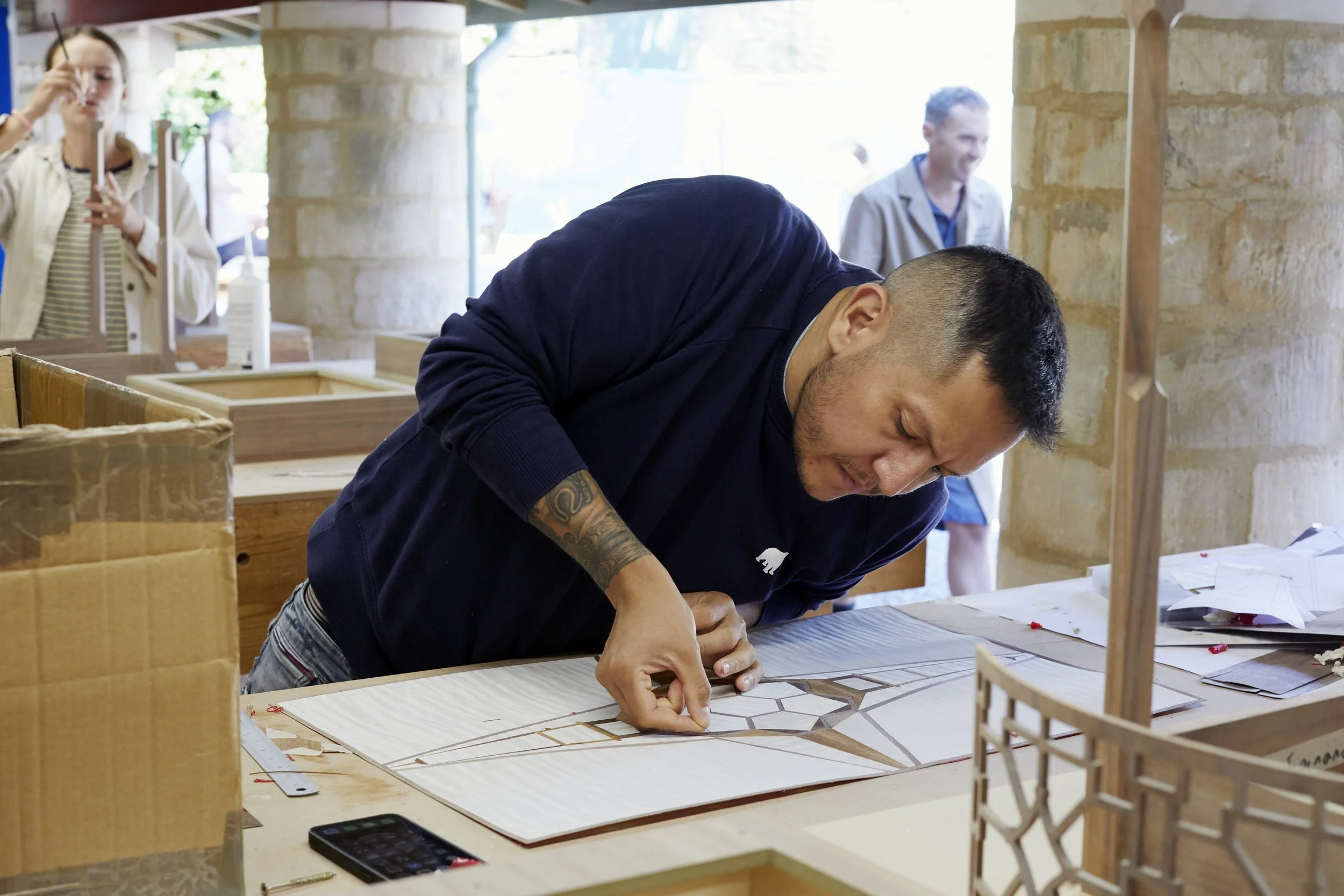
New home at Highgrove
The Snowdon School of Furniture now has a new home at The King’s Foundation at Highgrove in Gloucestershire where a collection of training programmes in heritage and craft skills are delivered by The King’s Foundation. The facilities include textile studios and bespoke workshops which cater for stonemasonry, woodwork and related crafts. Located just a mile away from Tetbury and in beautiful Cotswold countryside, it makes for a picturesque location to escape to, engage with nature and focus on furniture making skills.
Our fixed machinery workshop is equipped with all the fundamentals, including a table saw, band saw, lathe, mortiser, belt sander and planer, thicknesser and pillar drill, whilst our bench workshop is kitted out with professional power tools. We have our own timber store stocked with a range of hard and softwoods, much of which is cut from locally grown trees. Students stay on site, each having their own rooms in a converted stable block. Even their beds were hand made on site from UK grown oak.
Create - Rethinking Wood
In addition to the Summer School, the 12-week Create – Rethinking Wood for Furniture Programme aims to educate and train graduate furniture design students in the value of wood as a sustainable and beautiful material for the production of design-led furniture.
The programme will run twice a year, enabling a small cohort of eight students at a time to establish an understanding of the process from woodland management to design and production. The Create programme is rooted in the belief that timber is a sustainable material for buildings and furniture.
We believe that if furniture makers understand the growing, harvesting, sawing and drying of timber, and its craft and production processes, then they can more effectively design and build furniture that is beautiful, functional and long-lasting.
Our aim is to initiate a change in thinking as we educate designers, makers, landowners, councils and the public, to think holistically about how we value and use wood. For me one of the pillars of our school is the material, and its sustainable use.
We feed our students the story of the importance and provenance of material, valuing it and using it well, We hope that this will grow to be a lifelong passion that they will carry with them into their own future work. We feel very lucky to have our relationship with Woodland Heritage - 95% of our timber at the school comes from Whitney Sawmill, and all of it is grown in the UK.
Students are treated to a day in the woods with Geraint Richards, head forester for The Duchy of Cornwall. They get invaluable information about the state of British woodland today, its history and what is expected for the future.
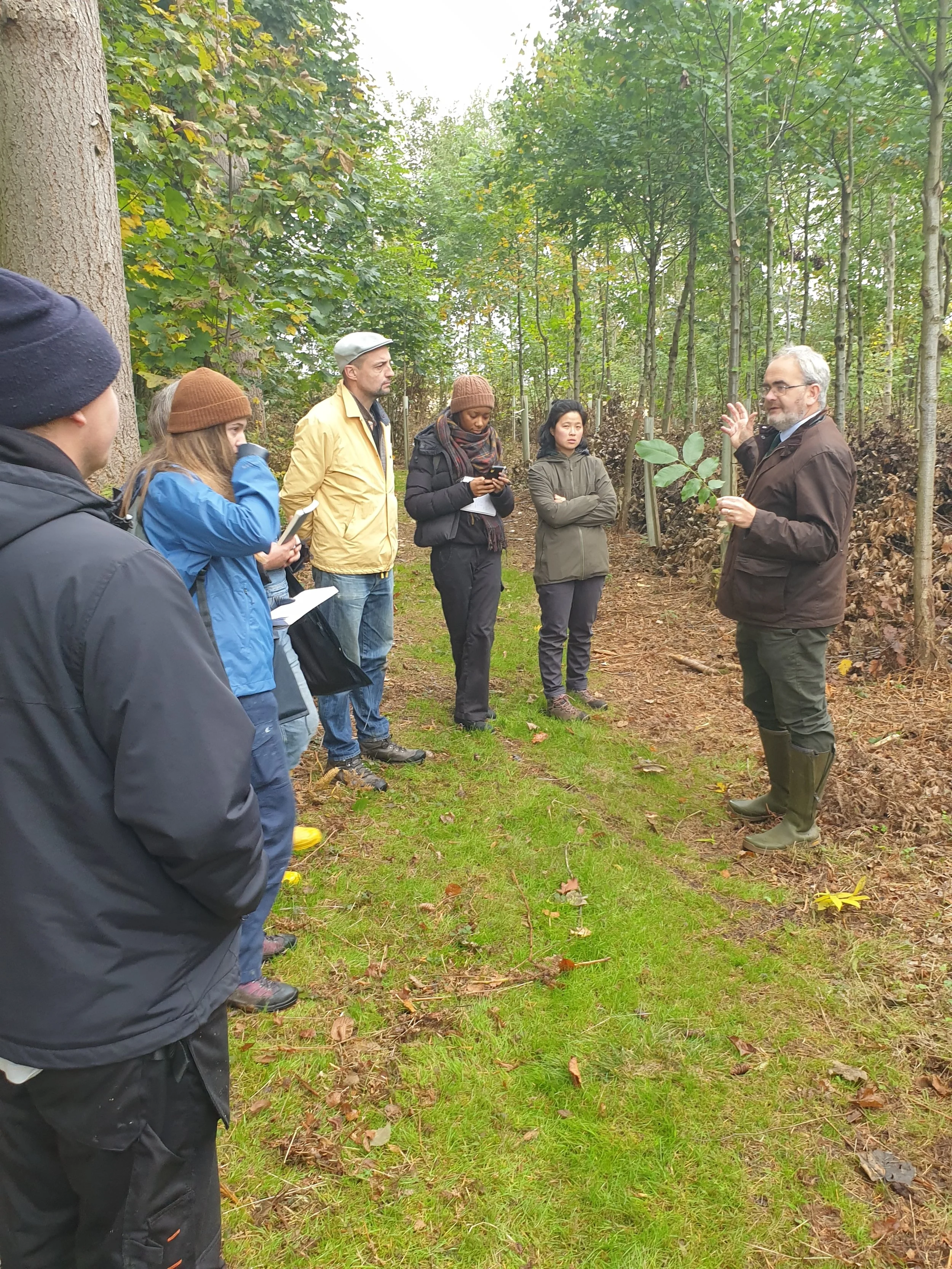
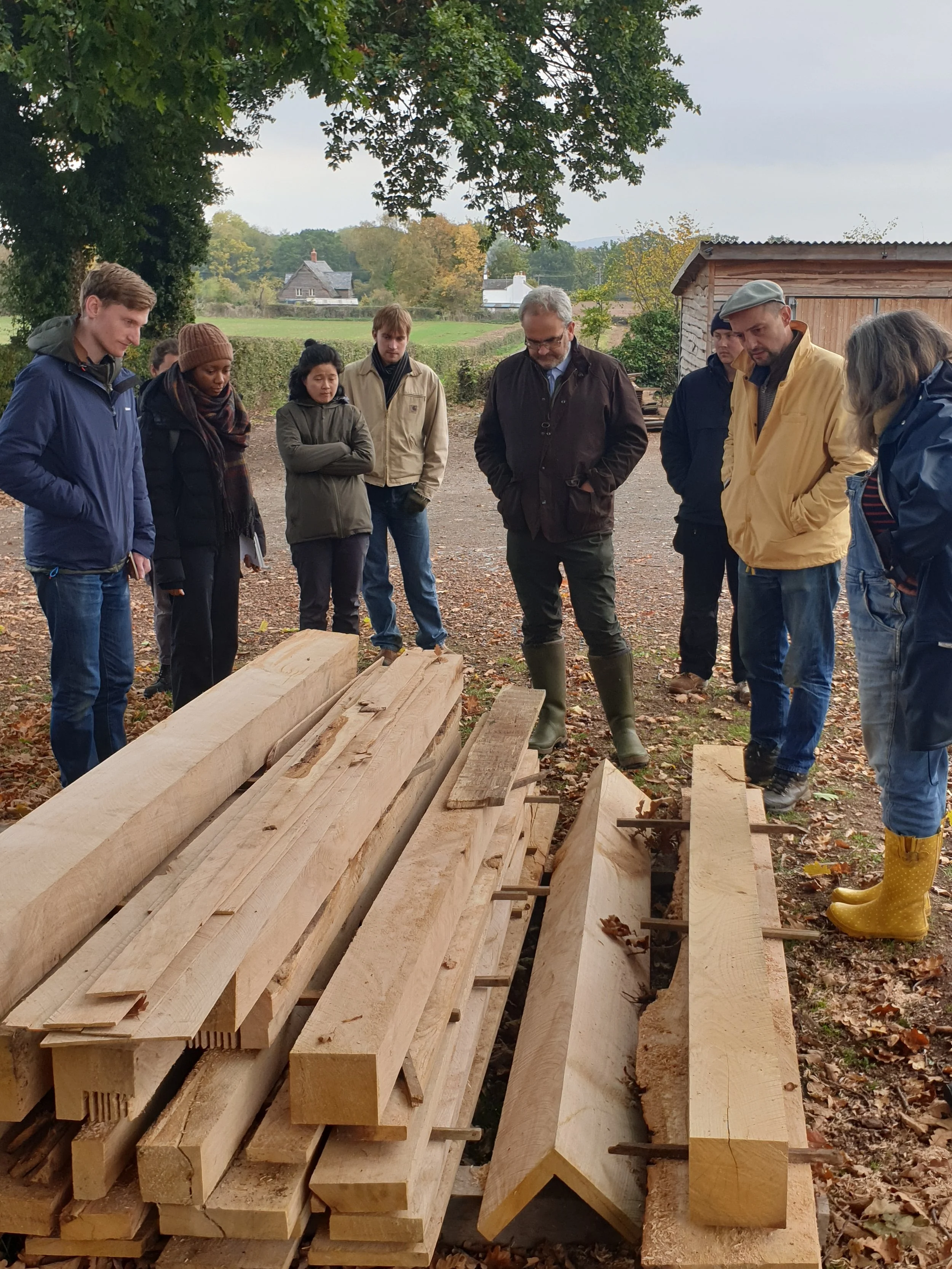
This is then followed by a day at Whitney Sawmill with Dermot Doyne where students learn the next part of the story. Choosing, grading, pricing and sawing timber including being shown examples of defective logs, and talking about uses for our various domestic timbers. All of this happens as a conversation where students benefit from Dermot’s experience as a sawmill owner (also a furniture maker himself), William Warren’s experience as a designer, and I throw in my bit as a maker too.
Students spend the third day of our woodland trip in the Timberline yard at the Duchy’s Shenmore estate with a mobile sawmill, where they see cutting on a different scale, and are able to specify cuts. This is what we call experimental cutting.
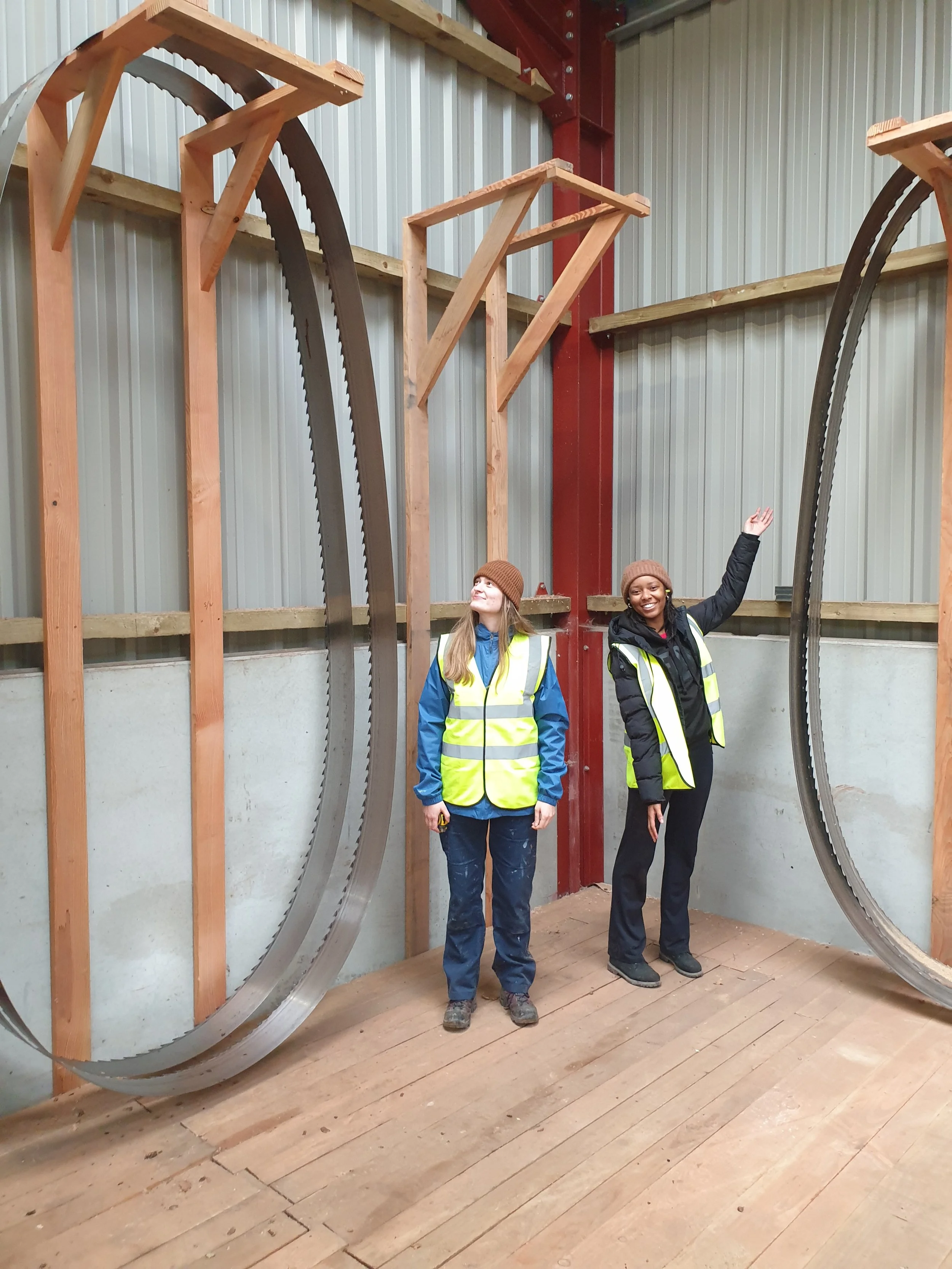
The students’ time at Whitney doesn’t end there as over the coming weeks they each return in pairs for a day’s work experience carrying out a variety of tasks to further deepen their knowledge and start to feel more familiar with a sawmill environment, which for most of them, as graduate designers, is a completely new experience.
The feedback has been hugely positive, with students raving about being given the opportunity to work directly with workers and get hands-on experience which helps deepen their understanding of all the processes timber goes through before ending up in the hands of the maker.
Future Courses
The Summer School is where it all began, and it remains enormously important to us. As a graduate myself, I feel fortunate after time spent working for Jonathan Rose, to come back and help teach the next students, bridging the gap between college and industry.
The school also has a remit to deliver courses to the local community and we are keen to offer programmes offering an introduction to the craft for those from deprived backgrounds where craft is more likely to be absent from schools. Our textile tutors are already making a success of this and are working with schools in Bristol and Stroud as well as partnering with Young Gloucestershire. Similar programmes by The King’s Foundation have achieved success at Dumfries House and at Trinity Buoy Wharf in London.
We are also planning short courses for the spring and evening classes for the future as well as short taster sessions that can be offered to visitors from Highgrove Gardens, which is set to reopen for tours in 2023.
Contact Nick Wright to register expressions of interest regarding applications for the next Create Programme. Nick.Wright@kings-foundation.org and https://kings-foundation.org/study-with-us/furniture-making/
To find out more about visiting Highgrove Gardens, visit www.highgrovegardens.com
Wood Culture: the Journal of Woodland Heritage is published annually as a benefit of membership. You can support Woodland Heritage by becoming a member - join below.